
Do You Need a Lawyer to Buy Property in the Dominican Republic? (The Real Answer)
Dominican law does not require foreign buyers to hire an attorney to purchase property. That’s the short answer. The longer answer is the one worth reading, and the one that explains why so many buyers who skipped independent legal review ended up paying for it later.
In This Article
- Dominican notaries certify signatures, they don’t represent your interests
- Every other professional in the transaction earns more when you buy
- Three real cases where buyers without independent counsel paid the price
- Six areas only an independent attorney checks before you commit
What Dominican Law Actually Says
Under Dominican law, a real estate transaction can be formalized through a notary (Notario Público). Most foreign buyers assume this means someone in the room is verifying the deal on their behalf.
Here’s how it actually works in practice: the parties sign the contract between themselves. The document is then brought to a notary, separately, often days later, who stamps and seals it to certify the signatures. In 99% of transactions in the Dominican Republic, the notary is not present at the signing.
There is no verification, no review, no representation happening in that moment. Dominican notaries don’t register titles, don’t perform due diligence, and don’t represent either party’s interests. Their role is administrative: they certify that a signature is authentic. What that signature is committing you to is entirely your problem.
That’s a critical distinction. One that the real estate industry in the Dominican Republic rarely explains to buyers.
The Incentive Problem Nobody Talks About
Every professional involved in a Dominican real estate transaction, the developer’s sales team, the real estate agent, and often the attorney they recommend, earns more money when you buy. The agent earns a commission. The developer’s lawyer gets paid to close. Even the attorney your agent refers you to typically works from a structure tied to transaction volume.
When everyone at the table profits from your yes, getting a neutral opinion requires going outside the table entirely.
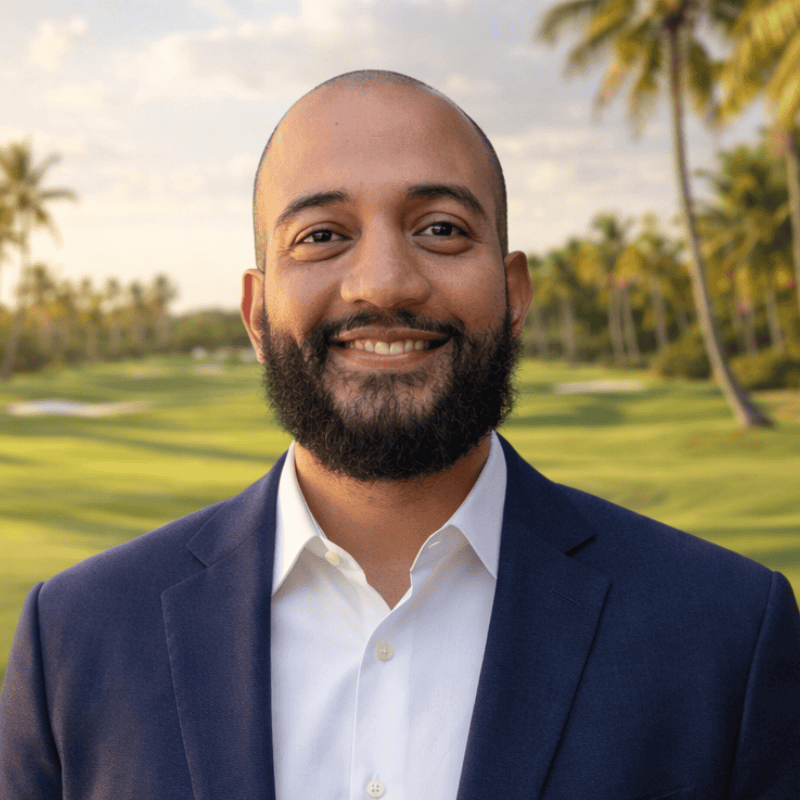
Gonzalo Sánchez, Founder & Lead Attorney, CanaLawThis is why CanaLaw operates on a flat fee, paid upfront, completely independent of whether the deal closes. You receive the same opinion whether you buy or walk away. That’s the only structure that makes honest legal advice structurally possible.
It’s worth asking any attorney you work with in this market: Who referred you, and do you receive any benefit when this transaction closes? The answer tells you everything about whether the opinion you’re getting is independent.
What Buyers Who Skipped Legal Review Actually Faced
These are real situations, not hypothetical risks. The clients aren’t named, but the outcomes were real, and in each case, an independent review would have caught the problem before the contract was signed.
The title with a lien nobody disclosed
A buyer from the United States purchased a two-bedroom condo in a Punta Cana development. The developer’s attorney handled everything. The title transferred cleanly. Two years later, when the buyer tried to sell, a creditor emerged, an old mortgage from the original landowner that was never properly discharged. It had been attached to the property before the developer ever built on it. The buyer spent more in legal fees trying to resolve it than the property had appreciated.
The pre-construction contract with no real delivery date
A Canadian buyer signed a purchase agreement on a beachfront villa under development in Las Terrenas. The contract had a delivery date, but it was explicitly conditioned on the developer obtaining all necessary permits. No permit timeline. No penalty clause for delays. No deposit protection mechanism. When the project stalled for over two years, the buyer had no legal basis to recover deposits or compel completion. The clause wasn’t hidden. It was right there in the contract. Nobody explained what it actually meant.
The CONFOTUR exemption that never materialized
A buyer from Europe purchased a unit in a resort-style development specifically because of the CONFOTUR tax exemption, no property transfer tax, no IPI for 15 years. The contract referenced CONFOTUR benefits but contained no guarantee that the project would obtain or maintain that status. It didn’t. The exemption the buyer had factored into their financial model was never legally secured, and the contract gave them no recourse to recover the difference.
None of these buyers did anything careless. They trusted the process. They used attorneys. They just used attorneys who weren’t working for them.
Wondering if your property is legally safe?
The Pre-Purchase Property Check™ gives you a clear, independent legal opinion before you commit. Title verification, contract review, developer background check, delivered in 5 business days.
Learn About the Property Check™ Or schedule a free 15-minute consultation to discuss your specific situation.What an Independent Attorney Actually Checks
When I review a transaction through the Pre-Purchase Property Check™, I’m looking at six distinct areas. The notary touches none of them.
1. Title history and chain of ownership
The Dominican land registry (Registro de Títulos) has been transitioning from an older system to the current Certificado de Título model for decades. Properties can carry title irregularities, encumbrances, partial ownership disputes, cadastral boundary mismatches, that don’t appear on the surface of a clean-looking document. A full title trace is not optional.
2. Municipal permits and construction legality
Does the building have a Licencia de Construcción? Is it final or still provisional? Does the unit you’re buying match what was actually permitted? In the Dominican Republic, it’s not uncommon for what was built to diverge from what was approved.
3. Developer background and financial health
Who are you actually buying from? On a pre-construction purchase especially, you’re not buying a property, you’re buying a promise. The person making that promise matters. I check the developer’s corporate registry, litigation history, and track record before recommending whether to proceed.
4. Contract clause analysis
Most purchase agreements in the Dominican Republic are drafted by the developer’s legal team, for the developer’s benefit. I look at delivery clauses, penalty provisions, deposit protection, price escalation language, and dispute resolution structures. The clauses that hurt buyers most are usually the ones that are quietly absent, not the ones that are explicitly unfavorable.
5. Tax and fiscal structure, including CONFOTUR
Does the property qualify for CONFOTUR tax exemption? Is that status verified and guaranteed in the contract, or just claimed in the sales pitch? What are the actual Impuesto al Patrimonio Inmobiliario (IPI) obligations? The difference between a developer’s claim and a contractual guarantee is where buyers get hurt.
6. Payment structure and deposit protection
Where does your deposit go? Is there a trust account (fideicomiso)? What happens to your money if the project doesn’t complete? In the Dominican Republic, deposit protection is not automatic. Whether your money is protected depends entirely on what the contract says.
The Property Check delivers a written opinion, GO, GO WITH CONDITIONS, or NO-GO, within 5 to 7 business days, with a clear explanation of exactly what was found and why. See how it works →
The Math That Makes This Obvious
The question isn’t whether you can afford independent legal review. The question is whether the risk of skipping it makes financial sense at any price point. I’ve seen the outcome when buyers skip it. I’ve almost never seen buyers regret doing it.
When You Might Not Need a Lawyer (Honestly)
There is one scenario where the calculus genuinely shifts: you’re buying a completed, ready-to-transfer property directly from someone you know personally and well. Not a developer. Not a stranger. Someone whose ownership history you can verify through the relationship itself, and where the transaction is straightforward enough that the layers of risk typical in new development deals simply aren’t present.
That’s a narrow situation. For the overwhelming majority of foreign buyers in the Dominican Republic, dealing with developers, projects, agents, and contracts drafted by someone else’s legal team, it doesn’t apply.
The issue isn’t that the Dominican Republic is a market to fear. Most transactions complete without catastrophe. The issue is that when something does go wrong, the consequences are serious and the legal recourse is slow. Independent review is insurance against low-probability, high-severity outcomes. You don’t know which category your deal falls into until someone checks.
What to Do Before You Sign Anything
If you’re at the stage of reviewing a purchase agreement, this is the sequence that protects you:
- Do not sign anything before getting an independent review of the contract. Developers often create urgency around offers. Real estate deals in the Dominican Republic do not evaporate the way a competitive US market might make you feel they will.
- Get a title search done independently, not through the developer’s team. The title history needs to be read by someone who has no stake in whether the transaction closes.
- Verify permits before you get attached to a property. Permit issues can be resolved in some cases, but it’s better to know before your emotional investment deepens.
- Confirm CONFOTUR status in writing, not in a sales brochure, not verbally, but as a contractual guarantee with defined consequences if the developer fails to obtain or maintain it.
- Understand the payment structure before making a deposit. Know exactly where your money goes and under what conditions it is protected or returnable.
The Pre-Purchase Property Check™ covers all of these in a single engagement, with a written report delivered within 5 to 7 business days.
Ready to protect your investment?
Schedule a free 15-minute consultation with Gonzalo. We’ll go over your specific situation, identify the key risk areas, and tell you exactly what needs to be reviewed before you sign.
Schedule a Free Consultation No commitment. Available in English and Spanish. Or reach us on WhatsApp.